Wednesday, September 14, 2016

Action and Emotion


This photograph shows the best action and emotion
because of the people in the image. These people
look excited, surprised, and happy, we know this
because of the looks on their faces. This image also
shows action because this photo was taken in the
middle of an exploding science experiment with
bubbles flying everywhere.

The Story


This photograph shows the best story because of
the emotion it gives you. It makes you feel caring,
and that your not alone. I believe this image is
giving you the story of together you will be stronger
and it seems they are praying for America because
they are all holding hands with their heads down by
the American flag.

Tuesday, September 13, 2016

Post Shoot Reflection

1.   Some challenges I encountered while finding the shots for the prompts were finding something     unique that people have not thought of and were different. Another challenge I faced was getting my photograph to be focused on the one prompt.

2.   Some technical aspects I focused on while taking the photographs were making sure the photos were focused and to make sure I was holding the camera correctly. I believe that I was holding and taking care of the camera properly but one thing that was a problem was the auto focus. The auto focus was not working so I had to manually focus it, which I need to work on.

3.   If I could do the #1 prompt shoot again I would do a couple things differently by taking more time on focusing my photographs and take time on the shots I really want and make them perfect to post. I would also try some new ways of photography like the simplicity, balance, lines, and rule of thirds.

4.   Things I wouldn't change with my post would be the angles I chose to take my photos in and some of the objects.

5.    (located on prompt assignment post)

6.   I am interested in shooting the same prompts again because I would find more unique subjects t display the prompts. I would also like to try and use some of the rules of composition we learned about like rule of thirds, balance, simplicity, and more.

http://erikasphotojournalismblog.blogspot.com

- In Erika's first prompt shoot for metal I like how clear the tuba is and its angle, also the reflection on the metal adds depth to the photo.
- In Erika's first prompt shoot for happy I like that she chose something that she loved, that was unique, and clear.

 - One thing Erika can improve on is are her angles of the photographs. By doing this her photos will be more defined and clear. She also could have used some of the rules of compositions to makes her photographs better.


Friday, September 9, 2016

Avoiding Merger


In this photograph, the way the men are overlapping
each other and partly cut off at the arms and legs
shows merger and it shows that the men were in action.

Framing


In this photograph, the first responder climbing the
ladder is framed by the ridged whole in the building
which makes the subject of the photo, the man, stand out.

Balance


In this photograph, the two women are balancing the
man and the way he is holding the women forms a
triangle and all three of them form a triangle.

Lines


In this photograph, the building with the lines is
dynamic, by there are many of them and the diagonal
line pops because of the length and the color change.

The Rule of Thirds


In this photograph, it shows the rule of thirds because
the subject of the photo, the first responder, is on
the right side which gives the photo dynamics and
splits the photo into three.

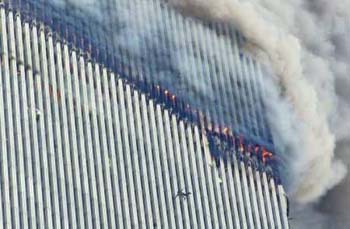
Simplicity


In this photograph, the man pops because
of how simple the building color and structure
behind him is and the shape and way the man is
falling is simple.

Prompt Shoot #1

Happy

This photograph displays a merger because of the
partially cut off flowers. I believe the green
background gives the photo some simplicity. I could
 have also showed rule of thirds if I were to move the
 yellow flower more to the right.


Metal

This photograph displays lines with the metal bars.
I also believe this photograph displays some simplicity
because of subject, I feel I could have showed more
simplicity by shooting at another angle like straight on.

Bowie

This photograph displays simplicity because of the
defined red paw prints and the plain black background.
I also believe this photograph shows merger because
of the cut of paw prints.

Square

This photograph shows lines because of the locker
shapes and the lines on the locker. I believe it also
shows simplicity, it could have been displayed better
if I had a different angle.

Friday, September 2, 2016

The Camera History and Basic Functions

1. Explain the “camera obscura” effect. How is it achieved?    
- The "camera obscura" effect, or "dark room", is known as the first camera. This camera is a dark box with a small hole in one wall, in this hole a stream of light is shown through, on the other side of the box the outside view is shown on the wall upside down. The hole acts as the lens and this lens projects light onto the wall of a dark room.

2. What invention during the 17th Century helped man get a step closer to creating the modern camera?

- The invention that was created in the 17th century that helped men create the modern camera was the lenses and optics created by Isaac Newton and Christian Huygens.

3. What were the parts of the first modern camera invented by Niepce?

- The parts of the first modern camera invented by Joseph Niepce were a glass lens, a dark box, and a film.

4.What do modern digital cameras have in common with Niepce’s camera?

- The modern digital camera and Niepce's camera both are composed of lens, a dark box, and a film.

5. What do digital cameras use to capture an image?

- The digital camera uses an electronic sensor, or a CCD, to capture images.

6. What is the difference between the Auto Mode and the Program mode?

- The difference between auto mode and program mode is that auto mode can be controlled and the program mode is automatic.

7. What is the Portrait mode used for? How does it work?

- The portrait mode is used for blurring out backgrounds of a picture by using the fastest lens available on the camera.

8. What is the Sports mode used for? (not just sports) How does it work?

- The sports mode is used for capturing action shots in a freeze motion by using the highest shorter speed.

9. Why should you do a half press on the trigger button?

- You should do a half press on the trigger button because the camera will be set to take a picture, it will focus better and be quick.

10. What does this symbol mean? When would you use this?

- This controlling flash symbol is the disabled flash mode, it is used to disable the flash.

11. 
What does this symbol mean? When would you use this?

- This controlling flash symbol is the auto-flash mode, it is used to turn on flash automatically if the camera thinks the picture needs more light.

12. What happens to your photo if there is too much light?

- If there is too much light in your picture the picture will be washed out.

13. What happens to your photo if there is not enough light?

- If there is not enough light in your picture the picture will be too dark.

14. What is a “stop.”

- A "stop" is a term that is a relative measurement of light.

15. How many stops brighter is the new planet if there are two suns instead of one?

- The planet is 1 stop brighter with two suns instead of one sun.

16. How many stops brighter is the new planet if there are four suns instead of two?

- The planet is 2 stops brighter with four suns instead of two suns.

17. What affect does a longer shutter speed of have?

- The effect of having a longer shutter speed gives the film more light.

18. What affect does a shorter shutter speed have?

- The effect of having a shorter shutter speed gives the film less light. 

19. What does the aperture control?

- The aperture controls the opening of where and how much light comes in.

20. When adjusting the aperture, how can you increase the amount of light?

- You can increase the amount of light in the aperture by making the opening bigger.

Silhouettes